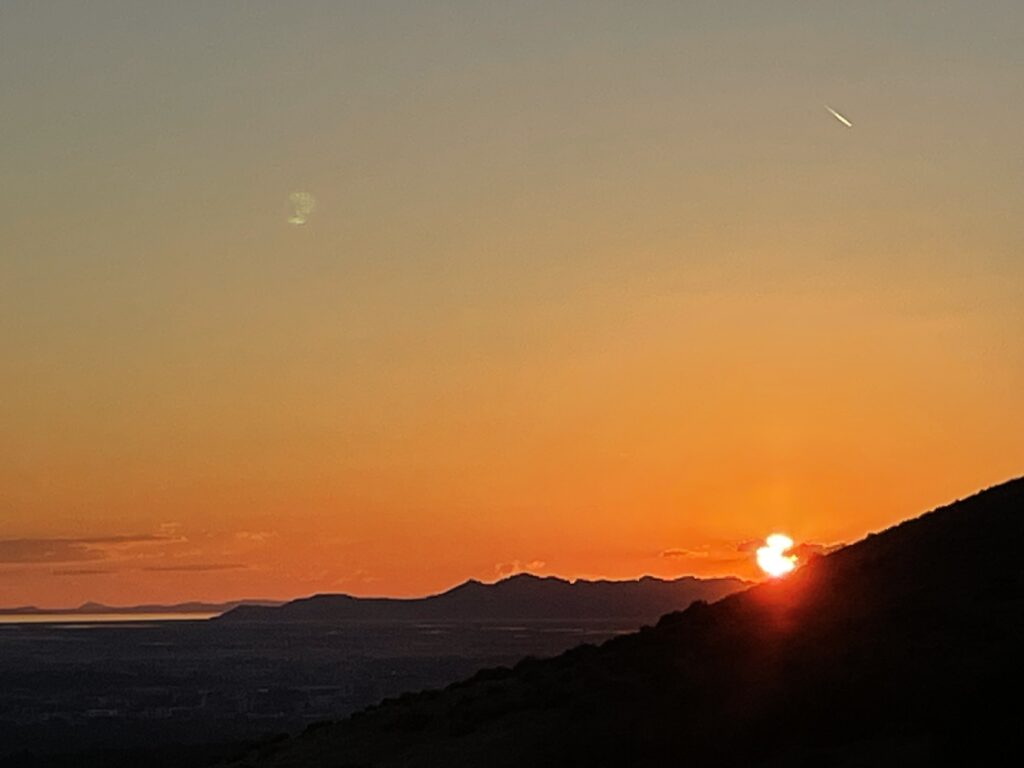
Solstice is an astronomical event that occurs twice a year, signifies the start of astronomical summer (Summer Solstice) and winter (Winter Solstice). Today June 21, 2026 is the Summer Solstice in the Northern Hemisphere, and marked by an exact moment – 4.24 am (EDT USA), when the earth is tilted towards the Sun at its maximum and the Sun is at its northern most point relative to its position on the equator. Solstice also marks the longest and shortest days of the year in the northern and southern hemispheres.
The word solstice comes from the Latin word solstitium, etymologically, combination of two words, sol (meaning “sun”) and sistere (meaning “to stand still”). This is believed to have been coined by observations of Sun’s position few days leading to and after a Solstice when the Sun’s position seems to be unchanged.
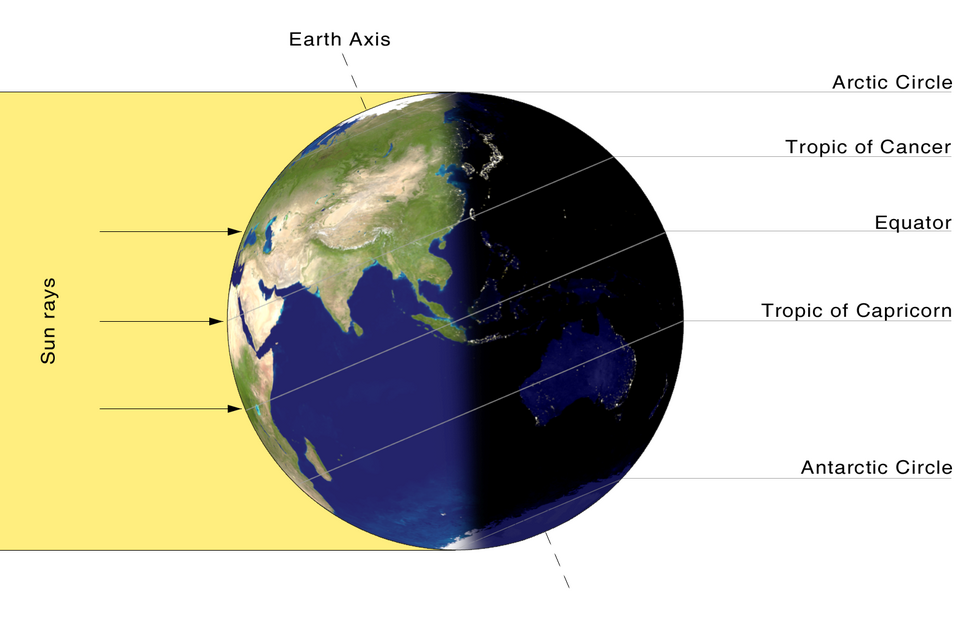
Solstices denote extremes, when the Sun’s path shifts to the farthest points in the horizon, leading to longest and shortest days of the year. It also aligns with start of hotter or colder months (summer or winter), as opposed to equinoxes which denote a balance or equal, with days and nights being almost of equal length, milder temperatures compared to the extreme cold or heat (spring and fall/autumn).
Another noteworthy question to ponder is – though summer solstice is the longest day of the year, we get more sunlight, so should it not also be the hottest day of the year? By experience, we know that in the Northern Hemisphere, the temperatures peak around mid-late July in most mid and higher latitudes, often referred to as “lag of the seasons”. Typically mountains tops are still ladden with snow and ice, which starts to melt after the solstice, the ocean and ground take time to warm up and this is why we typically experience the hottest days a month or more from the June solstice. However, in years like this with low snowbanks, shorter winter (in the Mountain and western half of the US), the hotter days seem to getting closer to the June solstice and staying hot for longer through the summer.
Solstice and time tracking: In today’s era, with accurate time tracking and precise calendars, we get notified of astronomical events way ahead of when these events happen. Solstices remind us of a half year mark based on the yearly calendar of 365 days. We don’t have to look at the sky in today’s world to know which month we are in.
But in the days of ancient humans, before advent of calendars, the question that comes to mind is – how would they have known when a time period, for eg. year ends and next year begins? From archeological evidences and ancient mounds, megaliths and monuments, we know our human ancestors have been looking skyward to Sun, Moon and Stars, observing their movements and noticing cyclical patterns since ancient times.
The history and evolution of time keeping and time tracking, from rudimentary observations of lengths and positions of shadows of poles, or reference mound or rock to creation of sundials and water clocks, leading to mechanical clocks and now, the atomic clocks is fascinating. Humans have been trying to track time for agricultural decisions- when to sow/reap etc, which was crucial for their survival.
So how does the ancient time tracking relate to a Solstice? Since at the summer solstice the Sunrise and Sunset are at the farthest points of separation in the horizon, this day is known to have been a reference point in time. “By observing the direction of the sunrise and sunset from a fixed point—for example, by placing a series of stakes in the ground to mark their positions over the course of the year—you’d gradually build up a partial circle of markers tracking the Sun’s progress across the horizon.” There are many such circular structures, like the Stonehenge, the Goseck Circle, Germany, the Nabta Playa, Egypt, among others built by ancient humans. Sundials were developed later as tools to find time of the day and year and there are few parallel versions that were developed across the globe by different sets of people & cultures.
An important distinction comes on the transition in human endeavor from finding time (relying on position of the sun and use of a sundial to know the time of the day) to tracking and keeping time (clocks that didn’t require direct observation of sun’s positions). Advent of modern clocks and a reference standard time GMT), have made it possible to track time, synchronize our satellites, traffic lights, trains and flights among other things, a now ubiquitous feature of the modern world.
Turning skyward is still a common thread I feel that connects us to our human ancestors, as I look at the sky to capture that final moment when the Solstice Sun goes down the Oquirrh Mountains in the west.
Happy Solstice and Happy Summer for those on Northern Hemisphere and Happy Winter Solstice for those on the Southern hemisphere !!